The Peak Window Is Open
The Theodore Payne Foundation's wildflower hotline updated this morning, as it does every Friday from March through May, and the news for this weekend is as good as it has been in years. This season is already looking positive on the wildflower front, thanks to rains and other conditions that are setting the stage for a spectacular spring show.
The acclaimed Theodore Payne Wild Flower Hotline, founded in 1983, offers free weekly online and recorded updates posted each Friday from March through May on the best spots for viewing spring wildflowers in Southern and Central California. All locations are on easily accessible public lands and range from urban to wild, distant to right here in Los Angeles. You can call the recording at 818-768-1802 ext. 7 every Friday morning for the freshest possible update, or read the full report at theodorepayne.org. Both are free.
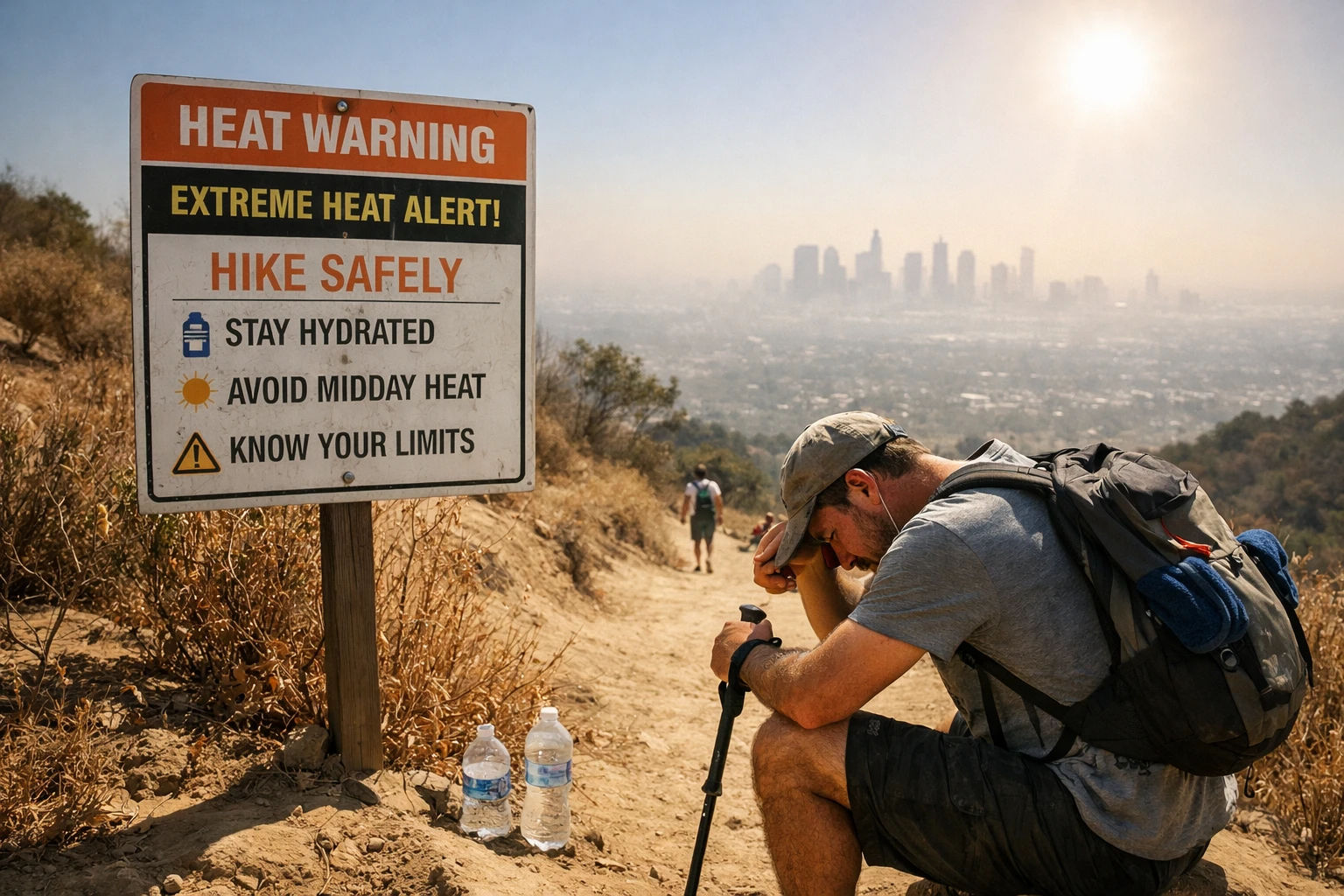
There is one important caveat before getting into destinations. The National Weather Service has issued a High Risk for Heat Illness advisory covering the Los Angeles area this week, describing conditions as extremely rare for March. The current heat emergency means that wildflower viewing this specific weekend requires the same early-start discipline that every serious LA hiker already knows to apply in summer. Start before 7 a.m. Be back at your car before 10 a.m. on exposed inland routes. The coastal sites on this list are under a less severe advisory and are viable into the mid-morning.
With that framing set, here is where to go.
Your Essential Resource
Before listing destinations, the Theodore Payne hotline deserves more than a mention in passing. The hotline has been in operation during the spring wildflower season for the last 41 years, and what really sets the service apart to fans is the descriptive and sometimes lyrical language. The driving force has been a woman named Lorrae Fuentes, a biologist with a focus in botany who transforms weekly highlights from the field into prose that is both pleasing to the ear and evokes clear images of colorful blooms.
Fuentes relies on a team of field reporters—people who work in parks, nature preserves, botanic gardens, and some folks who just hike regularly—who send their findings to her along with photos each week.
"These are people who were out there in the past week, looking at specific trails with specific eyes."
That field-reporter network is why the hotline is more reliable than anything you will find on Instagram or from a quick search. New recordings go live every Friday morning at 818-768-1802 ext. 7. Set a weekly alarm for Friday morning from now through May. This is the single most useful free resource available to Los Angeles wildflower enthusiasts, and it is used by a fraction of the people who would benefit from it.
One: Antelope Valley California Poppy Reserve
Distance from Downtown LA: Approximately 90 minutes via the 14 North Address: 15101 W. Lancaster Road, Lancaster, CA 93536 Hours: Open daily sunrise to sunset during bloom season Entry fee: $10 per vehicle Peak window: Mid-March through early May
Located 75 miles north of Los Angeles, the Antelope Valley California Poppy Reserve has become famous for its rolling hills of poppies, painting the landscape with orange and yellow. The park itself has several loops you can walk along that span up to around 7 miles if you do them all.
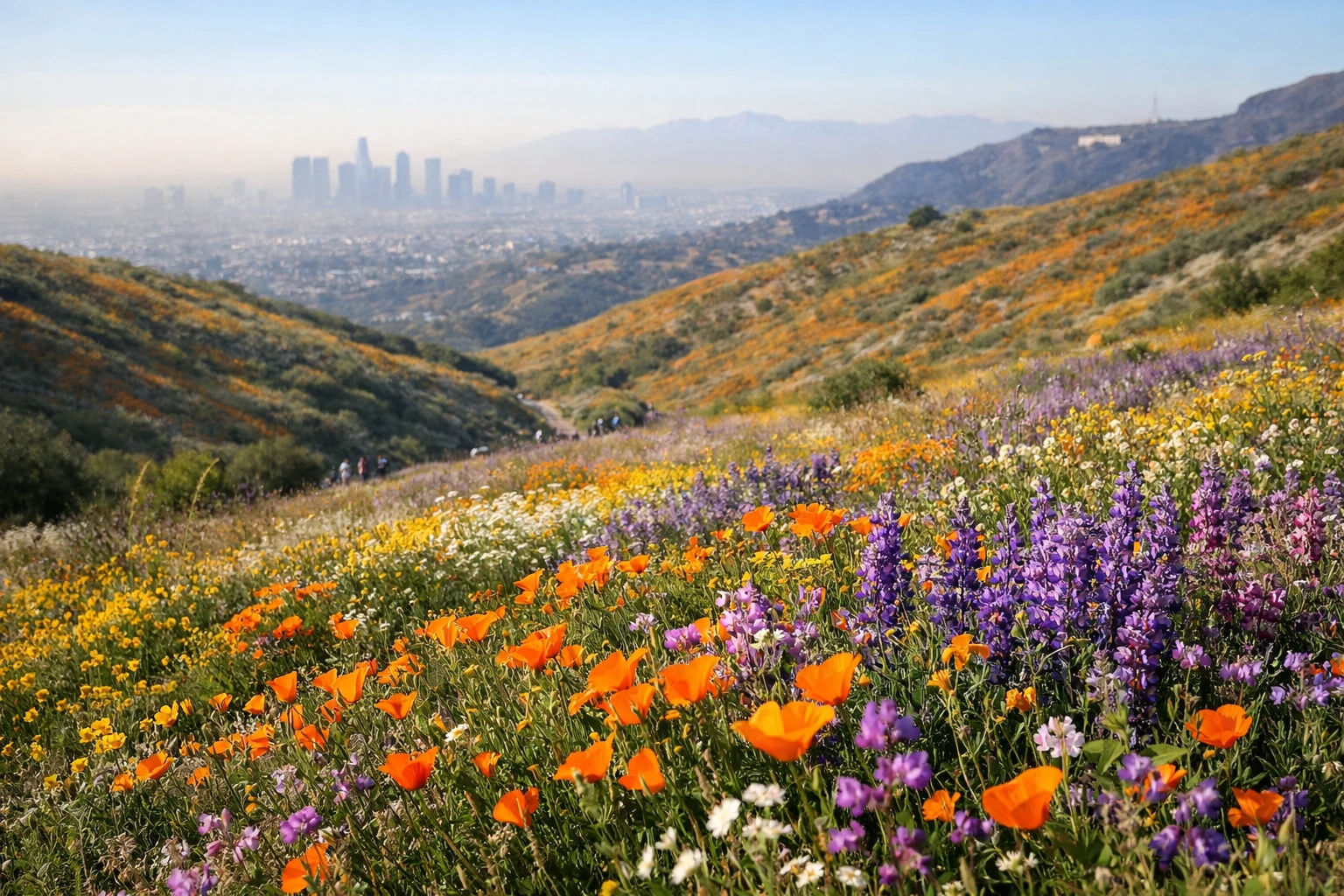
When conditions align, Antelope Valley is one of the most visually overwhelming natural displays in California. Entire hillsides go orange, while the yellow of goldfields fills the gaps between poppy clusters. On a clear morning with the wind down, looking out from the ridge trail over the Mojave with the colors running to the horizon is a genuinely extraordinary experience that no photograph fully captures.
"When it blooms well, nothing within two hours of Los Angeles matches this for sheer visual scale."
One of the better routes starts at the North trail, which climbs up from the right side of the visitor's center, then takes the South trail back, which is a descent that is fairly flat at the end. This path takes you across a wooden bridge with picturesque scenery and connects to the remaining smaller loops.
The access warning you need to read before going: Many of the roads around the Antelope Valley poppy fields are private residential roads, and rangers have issued an important visitor notice: please respect posted signs and do not drive down private roads, as residents have experienced increasing traffic and disruptions during the bloom season.
Stick to Lancaster Road and the official reserve entrance. The reserve itself has ample viewing without venturing onto residential roads, and the community around the reserve has dealt with enough disruption during peak years that the signage asking visitors to stay off private roads should be treated as non-negotiable. The Los Angeles County Sheriff has issued citations in previous bloom years.
Honest assessment: The drive on the 14 through the Mojave on a clear March morning is its own reward. Worth every bit of the 90-minute drive from the city. Go on a weekday if you possibly can. Weekend crowds in a strong bloom year can back up parking at the reserve significantly.
Two: Point Mugu State Park, Malibu Coast
Distance from Downtown LA: Approximately 50 minutes via PCH North Address: 9000 W. Pacific Coast Highway, Malibu, CA 90265 Entry fee: $12 per vehicle Peak trails: La Jolla Canyon Trail and Ray Miller Trail Peak window: March through April
Point Mugu State Park sits at the far northwestern edge of the Santa Monica Mountains, where the range meets the Pacific and the microclimate produces a wildflower diversity that the drier interior slopes cannot match. The park is currently under a Heat Advisory rather than the more severe Extreme Heat Warning covering inland Los Angeles, which makes it the most viable full-morning option for wildflower viewing this specific weekend.
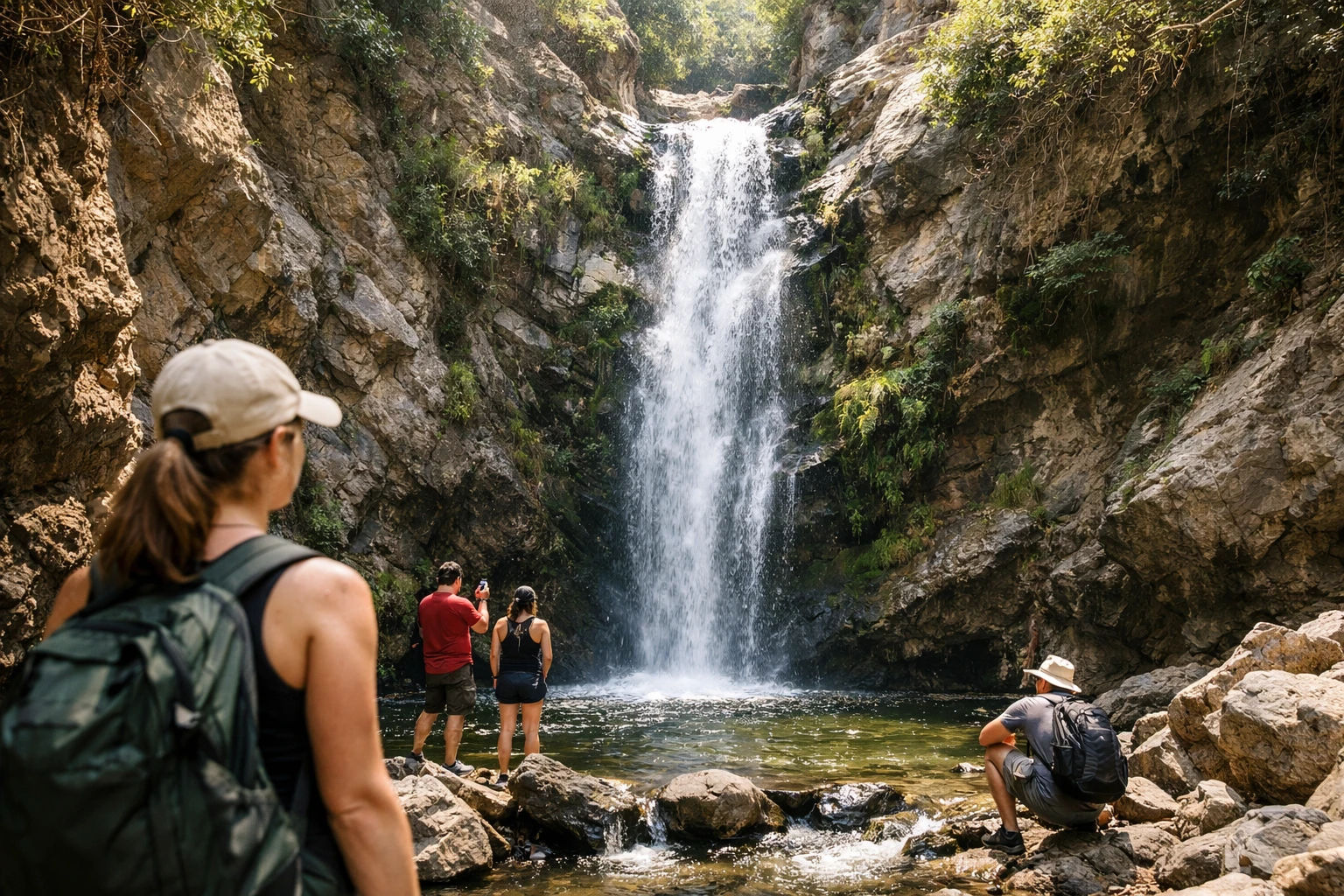
The La Jolla Canyon Trail is the primary wildflower trail in the park, climbing from the PCH parking lot through a riparian canyon that transitions into coastal sage scrub covered in purple lupine, golden poppies, white mariposa lilies, and the distinctive giant yellow coreopsis. The giant coreopsis, also called tree sunflower, grows only on the Channel Islands and a few coastal mainland locations, and seeing its yellow columns rising from the chaparral is one of the more distinctive wildflower sights in Southern California.
The trail climbs to a series of waterfalls that are running well after this winter's rain events, creating a combined waterfall-and-wildflower experience in a single hike. The round trip to the upper falls is approximately 5 miles with roughly 800 feet of elevation gain. Given the current heat advisory, start this hike no later than 7 a.m.
The Ray Miller Trail, which begins at the same trailhead and heads south along the ridgeline, offers more expansive views and a different wildflower community tilted toward coastal sage species. Less crowded than La Jolla Canyon on most weekends.
"The best wildflower hike within the Santa Monica Mountains, and the safest option for this specific weekend given the coastal temperature moderation."
Honest assessment: The combination of ocean views, running waterfalls, and diverse coastal wildflowers in a single morning is genuinely difficult to beat.
Three: Theodore Payne Foundation Nursery Grounds
Distance from Downtown LA: Approximately 30 minutes via the 5 North Address: 10459 Tuxford Street, Sun Valley, CA 91352 Hours: Wednesday through Saturday, 8:30 a.m. to 4:30 p.m. Entry fee: Free
This one is consistently overlooked because it does not involve driving to a desert or a mountain. The Theodore Payne Foundation's own nursery grounds in Sun Valley, adjacent to the hills of the Verdugo Mountains, include a native wildflower demonstration garden called Wildflower Hill that peaks in March and April alongside the nursery's California native plant sales yard.
The short hike up Wildflower Hill adjacent to the sales yard ushers visitors along the path with a group of lavender, purple, and blue bloomers including lacy phacelias, deep blue-purple Canterbury bells, fragrant woolly blue-curls, and blue dicks. The first few Matilija poppies are starting to open.
The nursery itself is one of the best resources for anyone who wants to bring California wildflowers into their own garden. Every native plant that is currently blooming in the wild is typically available as seed or starts during the spring season, and the staff knowledge about which plants are native to specific LA County microclimates is exceptional.
"The perfect wildflower experience for Angelenos who want native plant education alongside the visual display."
Honest assessment: Open Wednesday through Saturday, this is ideal for families with young children who need a more contained environment than an open desert or mountain trail.
Four: Chino Hills State Park
Distance from Downtown LA: Approximately 45 minutes via the 60 East Address: 4721 Sapphire Road, Chino Hills, CA 91709 Entry fee: $10 per vehicle Peak window: March through April
Forty miles north of San Diego in Chino Hills State Park, drive Bane Road or walk the Bane Ridge Trail to find California poppies, arroyo lupine, and Canterbury bells. Chino Hills is the least-covered wildflower destination on this list and arguably the most underrated, offering the full palette of Southern California native spring bloomers without the drive to Antelope Valley or the weekend traffic on PCH.
The Bane Ridge Trail in the northwestern section of the park runs along a ridge that catches significant south-facing sun, which concentrates the bloom on the hillsides facing the trail. In a strong year, the poppies and lupine create alternating bands of orange and purple that run for hundreds of yards along the ridge. The views from the ridge on a clear morning extend to the San Gabriel Mountains to the north and the Pacific to the southwest.
The park is accessible from the 71 Freeway, which runs from the San Bernardino Freeway near Pomona. The parking areas at Carbon Canyon Road entrance are less crowded on Sunday mornings than the Sapphire Road entrance, which serves more of the horse trailer traffic.
"The best wildflower destination for Angelenos who live in the San Gabriel Valley or the Inland Empire."
Honest assessment: Genuinely excellent in a strong bloom year and virtually unknown by anyone who discovered it on a magazine list.
Five: Figueroa Mountain, Santa Barbara County
Distance from Downtown LA: Approximately 2 hours via the 101 North Access: Figueroa Mountain Road from Los Olivos or Solvang Entry fee: Free Peak window: Late March through May
The flanks of Figueroa Mountain put on a dependable wildflower show every year, due in part to the peak's rain-catching elevation of 4,528 feet. In April and May, take a scenic drive up the flanks from Solvang or Los Olivos to see buttercups, milkmaids, sky lupines, and California poppies, plus wide-angle views of the Santa Barbara backcountry.
"Fig Mountain," as it is known to regulars, is the most consistently reliable two-hour drive from Los Angeles in the Theodore Payne hotline's annual coverage, and the consistency comes from that elevation. When the Antelope Valley bloom is timing out or running late, when the coastal sites are between cycles, Figueroa Mountain has moisture and moderate temperatures that extend the blooming season several weeks beyond what lower elevations offer.
"The right destination for Angelenos who want to make a day of it, combining the wildflowers with lunch in Los Olivos or a wine tasting stop in the Santa Ynez Valley."
Honest assessment: Worth starting early and making a relaxed day rather than treating it as a quick out-and-back.
Fire Followers: The 2026 Bloom Story
There is a wildflower story specific to 2026 that deserves its own section. After the devastating Los Angeles-area wildfires of late 2025, there is a silver lining that most wildflower guides will not tell you about: fire followers. Fire followers are native wildflower species that remain dormant in the soil for years, sometimes decades, waiting for fire to clear competing vegetation. When it finally burns, they explode into bloom. The scale of the 2025 fires means 2026 could produce fire follower displays unlike anything we have seen in years.
Watch for blooms in the Santa Monica Mountains and Altadena foothills, but respect all area closures for safety. Fire-affected areas may produce spectacular displays of Plummer's mariposa lily, fire poppies, whispering bells, and dense lupine stands.
The Theodore Payne Foundation hotline has been tracking fire follower activity in burned areas of the Santa Monica Mountains and will continue to update specific accessible locations as they develop through April and May. Several areas that burned in the January 2026 fires are producing early fire follower species that will peak later in the spring. Subscribe to the hotline updates at theodorepayne.org to follow this story as it develops.
The Honest Guide to Using the Hotline
The hotline posts free weekly online and recorded updates each Friday from March through May, covering the best spots for viewing spring wildflowers in Southern and Central California. The phone recording at 818-768-1802 ext. 7 and the written report at theodorepayne.org are updated at the same time each Friday morning.
The hotline also publishes the reports as a podcast available on Spotify and Apple Podcasts under "The Wild Flower Hotline," which makes it easy to listen during the Friday morning drive and plan your weekend while commuting. The hotline features poetic descriptions written in botanical language that conveys both the scientific names and the visual experience of specific bloom conditions in each location.
For the most current and location-specific conditions, the hotline consistently outperforms any other source, including social media, AllTrails reports, and park websites. It reflects field visits from the previous week rather than historical descriptions of what a trail usually looks like in spring. That currency is exactly what you need when making a two-hour drive decision on a Saturday morning.
One More Note on the Heat
The extraordinary March heat advisory covering Los Angeles County this week affects the timing but not the quality of this weekend's wildflower opportunities. The blooms are there. The conditions are right. The rule is simply to be on the trail before 7 a.m. for inland destinations and to use the coastal sites at Point Mugu if you need more flexibility in your start time.
The heat is forecast to moderate significantly next week as temperatures return closer to seasonal norms. If this weekend's timing does not work for an early start, the bloom windows for every destination on this list extend through April and into May, and the week or two following this heat event will produce some of the most comfortable spring hiking conditions Los Angeles has seen this year.
The Theodore Payne hotline will update again next Friday, March 27, with new field conditions that reflect whatever the heat event did to the bloom timing across the region. Call 818-768-1802 ext. 7 every Friday morning through May for the freshest conditions, and visit theodorepayne.org for the full written report and photos.
Go see what the rain built. The window is open right now.
Theodore Payne Foundation Wild Flower Hotline: 818-768-1802 ext. 7, updated every Friday morning. Full written reports and photos at theodorepayne.org. Antelope Valley California Poppy Reserve: 15101 W. Lancaster Road, Lancaster, CA 93536. Point Mugu State Park: 9000 W. Pacific Coast Highway, Malibu, CA 90265. Theodore Payne Foundation Nursery: 10459 Tuxford Street, Sun Valley, CA 91352, open Wednesday through Saturday 8:30 a.m. to 4:30 p.m.