
LA's Kratom Ban Is Splitting the Wellness Community in Two
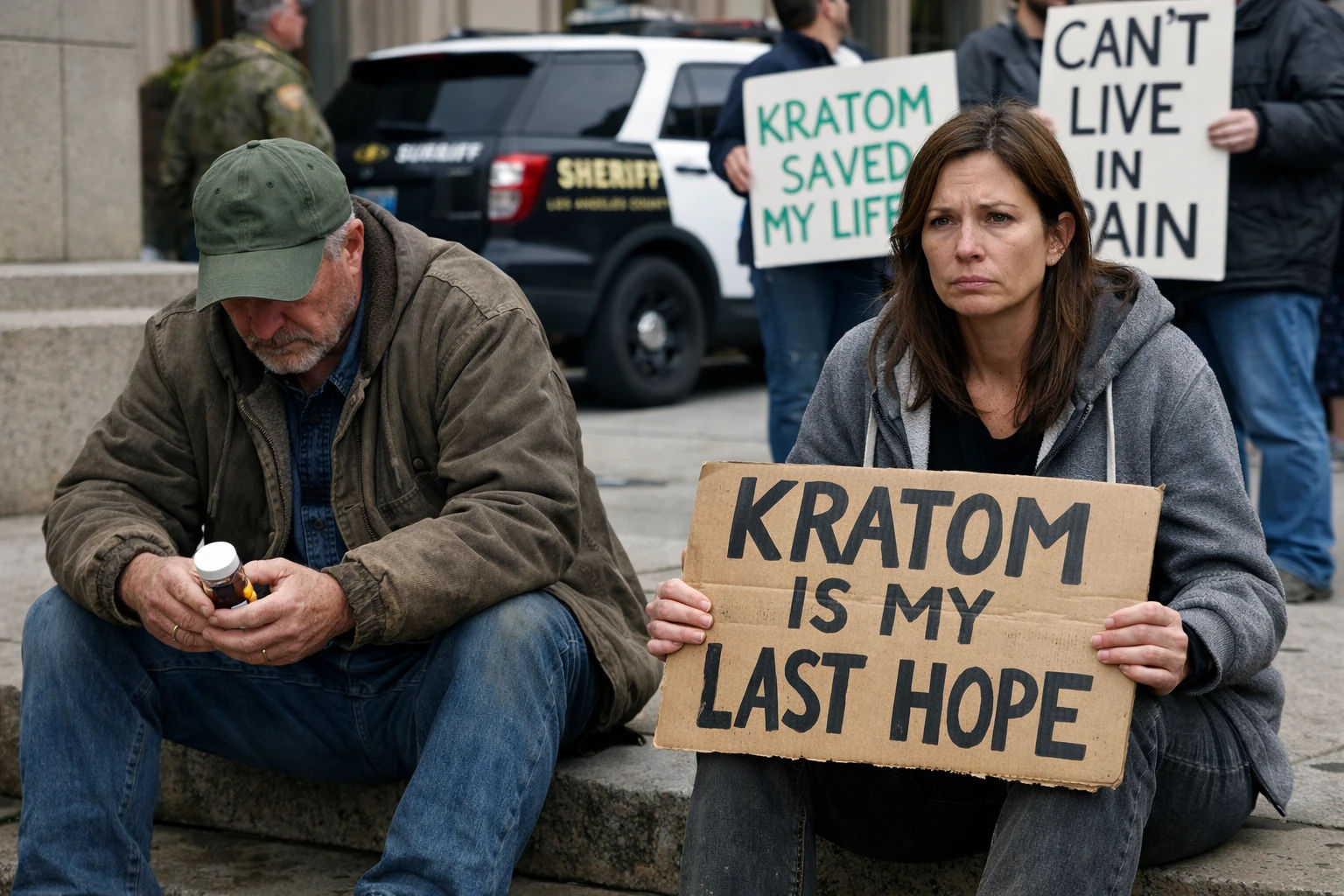
There is a conversation happening right now in smoke shops in Koreatown, in chronic pain support groups in the San Fernando Valley, and in online forums where Los Angeles residents share tips on managing everything from bad knees to opioid withdrawal. The conversation is urgent, and it is getting louder. Four months ago, Los Angeles County banned the sale of kratom and its synthetic derivative 7-OH, and the fallout has been far more complicated than health officials may have anticipated.
For some Angelenos, the ban is a long-overdue public health intervention. For others, it has cut off access to something they describe as the only affordable, effective tool they had for managing serious and sometimes debilitating conditions. Both sides believe they are fighting for their lives. And the science, inconveniently, does not fully back either one of them.
This is the most divisive wellness policy debate in Los Angeles right now. Here is what you need to know.
What Is Kratom and Why Were So Many Los Angeles Residents Using It?
Before getting into the politics and the policy, it is worth understanding what kratom actually is, because most of the debate has generated more heat than clarity on that basic question.
Kratom comes from the leaves of a tree native to Southeast Asia called Mitragyna speciosa. It has been used for hundreds of years to treat chronic pain, coughing, and diarrhea, as well as to boost energy. In low doses, kratom appears to act as a stimulant, though in higher doses it can have effects more like opioids.
It arrived in the United States more than 50 years ago and has spent most of that time in a murky regulatory space, sold openly in gas stations, smoke shops, and supplement stores without FDA approval but also without a federal ban. In Los Angeles, it became particularly popular among people dealing with chronic pain and those managing opioid withdrawal outside of formal medical treatment.
Then there is 7-OH, which is where things get significantly more complicated. Of particular concern to health officials is 7-hydroxymitragynine, often referred to as 7-OH. The compound occurs naturally in small amounts in kratom leaves but is sometimes concentrated or isolated to increase potency. According to the National Institutes of Health, 7-OH is approximately 13 times more potent than morphine and 46 times more potent than mitragynine, the chief psychoactive substance in the plant leaf.
That potency gap matters enormously. A lot of the debate around kratom as a gentle herbal supplement becomes significantly more complicated when synthetic, concentrated 7-OH products enter the picture. The two are often sold side by side and sometimes confused for each other, but they carry very different risk profiles.
How the LA County Ban Happened
In early November 2025, the Los Angeles County Department of Public Health issued urgent directives requiring all retailers to immediately stop selling and remove kratom and 7-OH products from their shelves. Health inspectors began visiting tobacco shops, gas stations, smoke shops, and other retailers to enforce the ban, red-tagging illegal products and warning store owners of serious consequences.
The immediate trigger was a cluster of deaths that alarmed county health officials. The Los Angeles County Department of Public Health announced additional fatal overdoses tied to kratom. A Los Angeles medical examiner identified three fatal overdoses in LA County residents between the ages of 18 to 40 years old, making the number of those affected a total of six. Alcohol was present with 7-OH in many of the fatal overdose cases, in addition to other medications and, at times, illicit substances.
Dr. Muntu Davis, Los Angeles County Health Officer, emphasized that "mixing or using it with alcohol, prescription drugs, or illicit substances can significantly slow breathing and lead to death." He was blunt about the county's position: these products were unregulated, their potency was unpredictable, and the risk of accidental overdose was real.
The enforcement action came with teeth. Retailers who failed to comply faced product seizure, destruction of inventory, fines, and other penalties. The county treated this as an immediate public health emergency, not a gradual phase-out.
Los Angeles was not acting alone. Orange County, Newport Beach, San Diego, and Oceanside had already prohibited the sale, distribution, or possession of kratom products. Riverside County had implemented age restrictions to deter sales to people under 21.
Then the state escalated the response significantly. On October 24, 2025, the California Department of Public Health issued a statewide consumer warning declaring that foods, dietary supplements, and medical drugs containing kratom or 7-OH are dangerous and illegal to sell or manufacture in California. To date, CDPH has seized more than five million dollars worth of kratom and 7-OH products under its authority.
By March 2026, Governor Newsom announced that the state's efforts to crack down on kratom products had resulted in the removal of more than 3,300 kratom and 7-OH products from retail stores, with a 95% compliance rate from businesses.
The Death Numbers: What They Actually Show
The statistics driving this policy deserve a closer look, because the numbers are being cited very differently depending on who is making the argument.
The California Department of Public Health has put forward a significant figure. As Maral Farsi, deputy director of the California Department of Public Health, noted during a February 18 state Senate hearing, the agency identified 362 kratom-related overdose deaths in California between 2019 and 2023, with a steady increase from 38 in 2019 up to 92 in 2023.
That is a steady climb over four years, and it is the number health officials have used most often to justify the ban. But those numbers have been challenged.
A Los Angeles Times investigation found that in a number of recent LA County deaths that were initially thought to be caused by kratom or 7-OH, there wasn't enough evidence to say those drugs alone caused the deaths. It might be the case that the danger is in mixing them with other substances.
The distinction matters. If the fatalities are primarily the result of combining kratom or 7-OH with alcohol, prescription medications, or illicit drugs, then the policy question becomes whether a total sales ban is the right response, or whether harm reduction education and regulation of potency and labeling might address the actual cause of death more precisely.
What is clear is that the six LA County deaths that triggered the ban all involved alcohol. Alcohol was present in all cases, and many also involved other medications and illicit substances. This polysubstance use pattern makes it difficult to determine 7-OH's exact role in the deaths.
None of that means kratom is safe. But it does suggest the policy picture is more complicated than a straightforward overdose crisis driven by a single substance.
The People the Ban Is Hurting
The most important and least covered part of this story is what happens to the people who were relying on kratom before the ban took effect.
Robert Wallace started using kratom a few years ago for his knees. For decades he had been in pain, which he says stems from his days as a physical education teacher for the Glendale Unified School District between 1989 and 1998, when he and his students primarily exercised on asphalt. Wallace is not a fringe figure in the kratom conversation. He is exactly the type of user that makes this policy debate genuinely difficult: a person using an accessible, affordable substance to manage a real physical condition, outside of a medical system that often reaches for opioids first and asks questions later.
Another user, when she heard the news of recent closures, said she had enough kratom capsules for now, but when she ran out, her option would have to be Tylenol and ibuprofen, "which will slowly kill my liver."
That is not dramatic language. Chronic use of over-the-counter NSAIDs and acetaminophen is genuinely associated with serious liver and kidney damage over time. For people with chronic pain who have exhausted conventional treatments, the choice between kratom and long-term Tylenol dependence is not as obvious as health officials may assume.
Then there is the opioid withdrawal population, which may be the most vulnerable group affected by the ban. Residents who relied on kratom for chronic pain and opioid withdrawal now struggle to access the substance, turning to online orders and black markets.
One of the primary concerns is abrupt discontinuation without medical support. Unlike regulated medications, many people using 7-OH or kratom have no taper plan and no clinical oversight. When products disappear from shelves quickly, individuals may attempt to stop suddenly or seek alternatives on their own. Individuals experiencing withdrawal or cravings may turn to other substances that are more readily available, including prescription opioids obtained illicitly or fentanyl-contaminated products.
That last point is crucial. If the goal of the ban is to reduce overdose deaths in Los Angeles County, but the practical effect is pushing people who used kratom to manage opioid cravings back toward street drugs, the ban could cause more deaths than it prevents. That is not a fringe concern. It is the central public health argument made by kratom advocates, and it has not been adequately answered by county officials.
The Enforcement Reality on LA Streets
The compliance numbers from Sacramento look good on paper. A 95% compliance rate across California retail locations is genuinely significant. But the street-level reality in Los Angeles is messier.
The county Public Health Department told the Times it conducted 2,696 kratom-related inspections between November 10 and January 27, and found 352 locations still selling kratom products. The health department said the majority stopped selling kratom after those inspections, but there were nine locations that ignored the warnings, and in those cases, inspectors impounded their kratom products.
More importantly, the ban has not eliminated access to kratom in Los Angeles. It has just changed where people get it. People who need kratom will buy it on the black market, drive far enough so they get to where it's sold legally, or order it online from a different state.
Online sales from out-of-state vendors have continued largely without interruption. The California ban targets retail sales within the state, not personal purchases from out-of-state websites. That means resourceful users with internet access, a credit card, and a mailing address can still get kratom delivered to their door in Los Feliz or Culver City without much difficulty. The ban, in practice, is most likely to affect the lowest-income users who relied on the accessibility of local smoke shops and cannot easily navigate online purchasing or absorb shipping costs.
The Scientific and Policy Debate That Hasn't Been Resolved
The 7-HOPE Alliance Foundation, a nonprofit focused on kratom and 7-OH research and policy, stated that California state agencies' advisories may have created a misleading impression surrounding the current regulatory and legislative status of kratom and 7-OH, and that it is inaccurate to say that it is illegal to sell kratom in all jurisdictions.
That is not just industry lobbying. The legal and regulatory status of kratom is genuinely contested at the federal level. The DEA has not listed kratom as a controlled substance, and it doesn't appear in the agency's 2025 National Drug Threat Assessment. This creates a situation where state and local governments are acting unilaterally based on FDA guidance rather than actual drug scheduling laws.
The FDA asked the DEA to classify 7-OH as a Schedule I controlled substance, the same category as heroin and LSD. As of early 2026, the DEA had not acted on that request.
At the February 18 California Senate hearing, Jackie Subeck, executive director of 7-Hope Alliance, made the case plainly: "Prohibition is not a public health strategy. It's only going to make things worse, likely resulting in an entirely new health crisis for Californians."
On the other side of that argument, medical clinicians are seeing real harm in their practices. "In my clinical experience, kratom use is relatively common in our community, particularly among individuals with chronic pain and those attempting to taper off or avoid prescription opioids," said one medical director. "Many patients begin using it with the belief that it is a safer, natural alternative. Most are unaware that kratom acts on opioid receptors in the brain and carries risk for tolerance, dependence, and withdrawal."
That clinical reality is real too. Kratom is not the simple, harmless herbal supplement it has sometimes been marketed as. Dependence does develop. Withdrawal is real and can be serious. And the unregulated, variable-potency products being sold at convenience stores in Boyle Heights and Burbank were not being produced with any meaningful quality control.
What the LA County Board of Supervisors Is Still Deciding
Even as the state has moved toward a sweeping enforcement posture, the policy question is not fully settled locally. Despite the state's actions, the Los Angeles County Board of Supervisors is still considering whether to regulate kratom or ban it altogether.
That distinction, between regulation and outright prohibition, is at the heart of the most sensible arguments in this debate. Several states have chosen a middle path, using what are called Kratom Consumer Protection Acts to set age limits, require accurate labeling, and cap 7-OH content in products rather than eliminating the market entirely.
A regulatory model would not solve every problem. It would not prevent people from mixing kratom with alcohol. It would not stop online sales of unregulated products from other states. But it would bring retail kratom in Los Angeles under a framework where potency is disclosed, age limits are enforced, and the dangerous combination of synthetic high-concentration 7-OH and alcohol carries at least some cautionary labeling rather than being sold next to energy drinks.
For the thousands of Los Angeles residents currently navigating chronic pain, opioid withdrawal, or both, without affordable medical support and without the kratom products they relied on, a regulatory framework is not an abstract policy preference. It is the difference between having access to a tool they say has changed their lives and being forced into less safe alternatives.
Where Does This Leave Angelenos Right Now?
The situation in Los Angeles as of March 2026 looks like this. Retail sales of kratom and 7-OH are effectively shut down throughout the county and across most of California. Compliance from businesses is high. Online sales from out-of-state continue. Black market access is available but involves unknown potency and zero quality control. The people most affected are those with chronic pain and those managing opioid withdrawal who relied on local retail access and cannot easily find or afford alternatives.
The scientific question of whether kratom alone poses lethal risks, or whether the risk is primarily in combining it with other substances, has not been resolved. The policy question of whether prohibition or regulation better serves public health has not been resolved either.
What has been decided is that Los Angeles County moved first and moved fast, driven by six deaths in a county of over 10 million people. Whether that response was proportionate, whether it will save more lives than it costs, and whether the people currently struggling to manage real conditions without their previous tools will be supported through that transition is still very much an open question.
If You or Someone You Know Is Affected
If you were using kratom for chronic pain or opioid withdrawal management and are now struggling to access it or manage the transition, there are resources available in Los Angeles County.
The county's Substance Abuse Service Helpline, known as SASH, connects residents to publicly funded substance use treatment services including outpatient programs, residential treatment, withdrawal management, and Opioid Treatment Programs. You can access the Services and Bed Availability Tool at SUDHelpLA.org or call the helpline directly.
For anyone experiencing adverse effects from kratom or 7-OH products, including withdrawal symptoms, contact the California Poison Control System at 1-800-222-1222.
If you believe a retailer is still selling kratom products in violation of the ban, reports can be submitted to the CDPH Complaint Hotline at 1-800-495-3232.
This is a story that is still developing. The Los Angeles County Board of Supervisors has not finalized its position. The federal scheduling question for 7-OH remains unresolved. And the tens of thousands of Angelenos caught in the middle of this debate deserve a policy conversation that takes both the real risks and the real human costs seriously.
Have a perspective on the kratom ban in Los Angeles? We want to hear from the community. Share your story in the comments below.