Fresh Renderings for La Brea Tar Pits
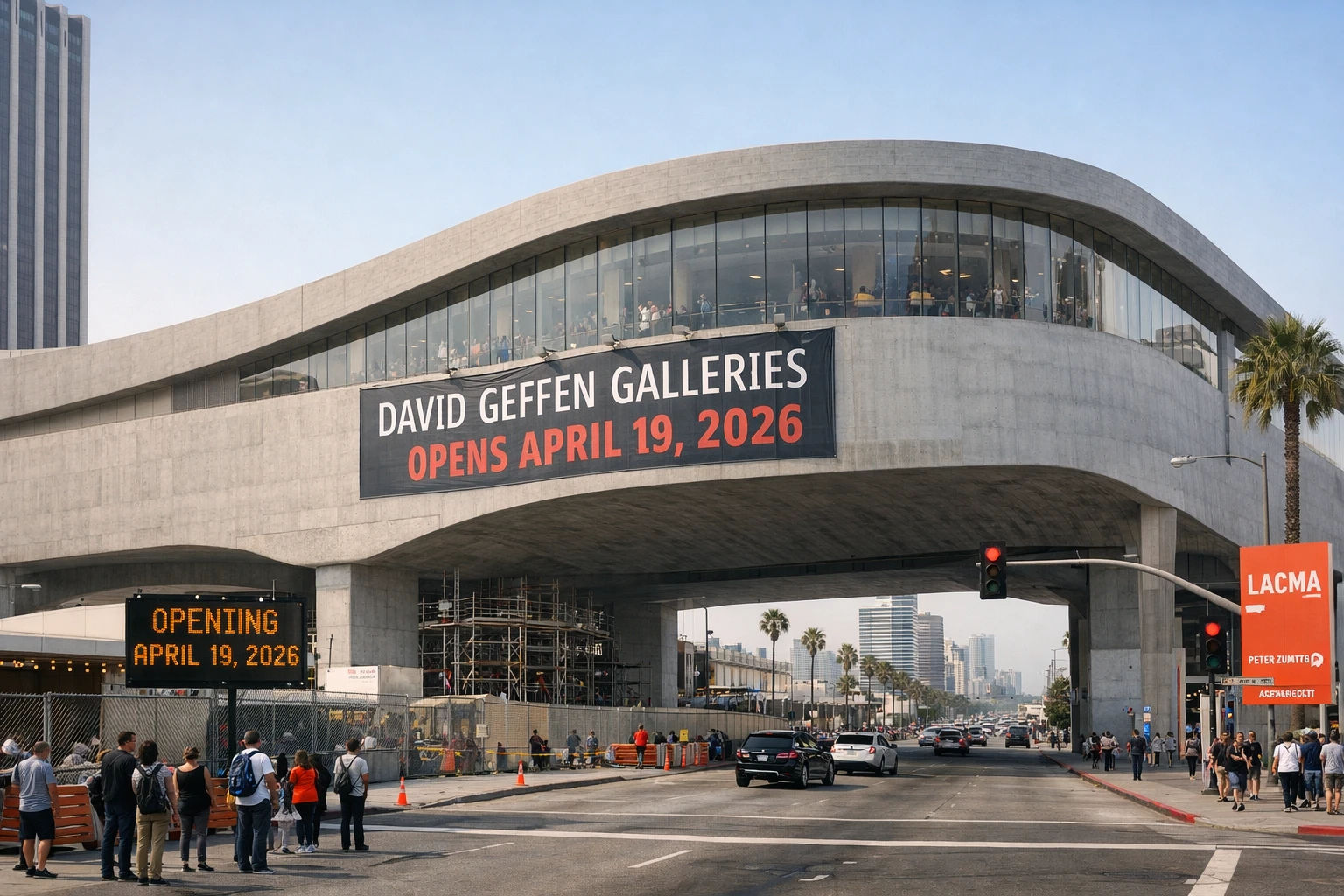
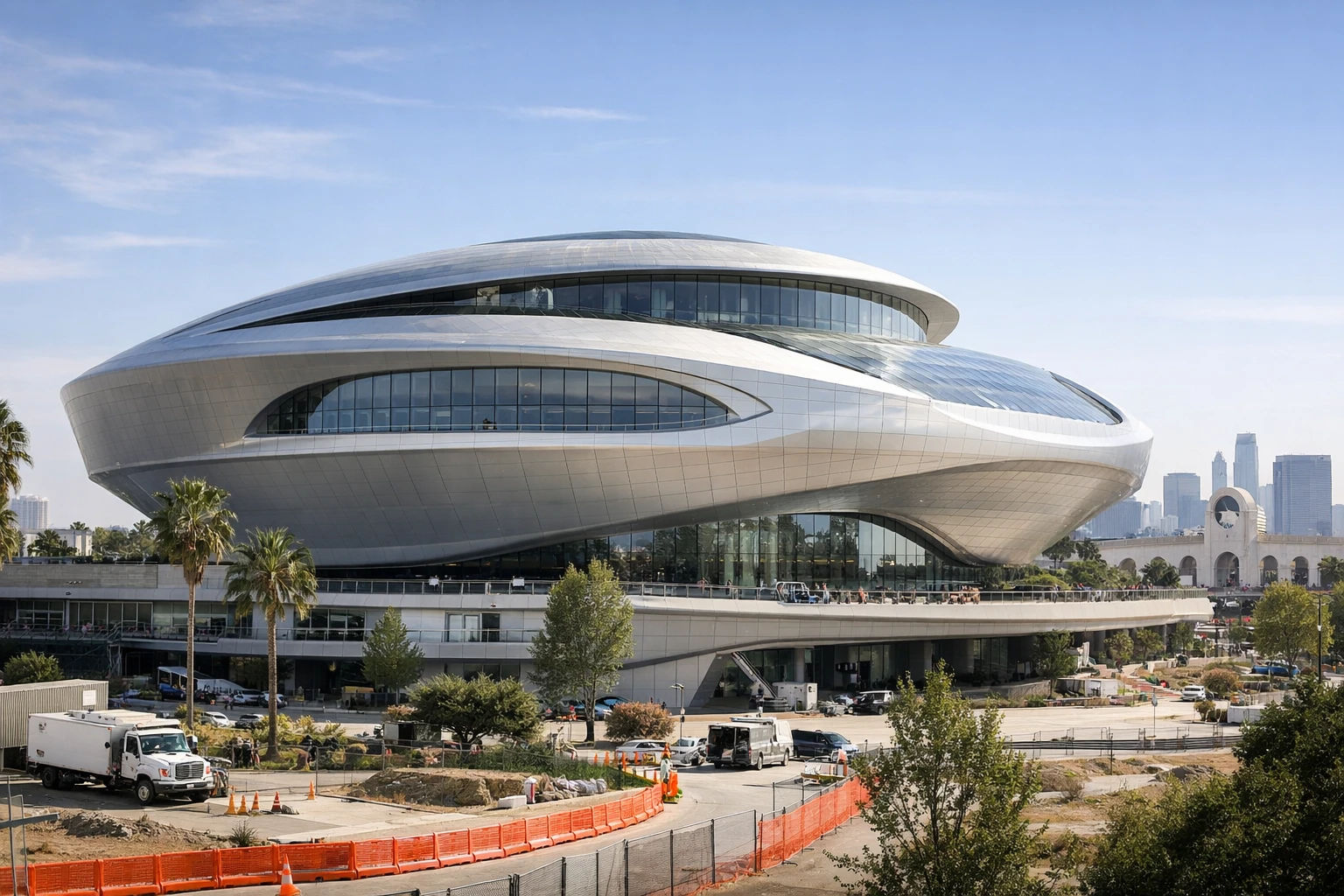
Stand on Wilshire Boulevard between Fairfax and La Brea on any given afternoon and count what you are looking at. To your east, Peter Zumthor's 900-foot concrete span for the LACMA David Geffen Galleries opens in April. A few blocks west, the Petersen Automotive Museum's stainless steel ribbons glow in the afternoon light. And directly in front of you, sitting behind its chain-link construction fence, is the La Brea Tar Pits, the most scientifically significant active paleontological site in the world, quietly preparing to transform itself for the first time in half a century.
The 13-acre site, which surrounds the Los Angeles County Museum of Art, is the only active paleontological research site located in a major urban area. It has not been renovated or considered comprehensively in the half-century since the George C. Page Museum opened to the public in 1977.
Fifty years. Not a single comprehensive renovation in fifty years, at a world-famous site that pulls over a million visitors annually, in one of the most architecturally active corridors in the country. That stasis is about to end.
WEISS/MANFREDI has released updated designs for the redesign of the La Brea Tar Pits and Museum, reimagining the Page Museum, active excavation sites, and Hancock Park as a single inside-outside museum closely connected to the surrounding landscape and neighborhood. The renderings released this month are the fullest picture yet of what this transformation will look like, and the images are genuinely striking for anyone who has spent time at the site in its current form.
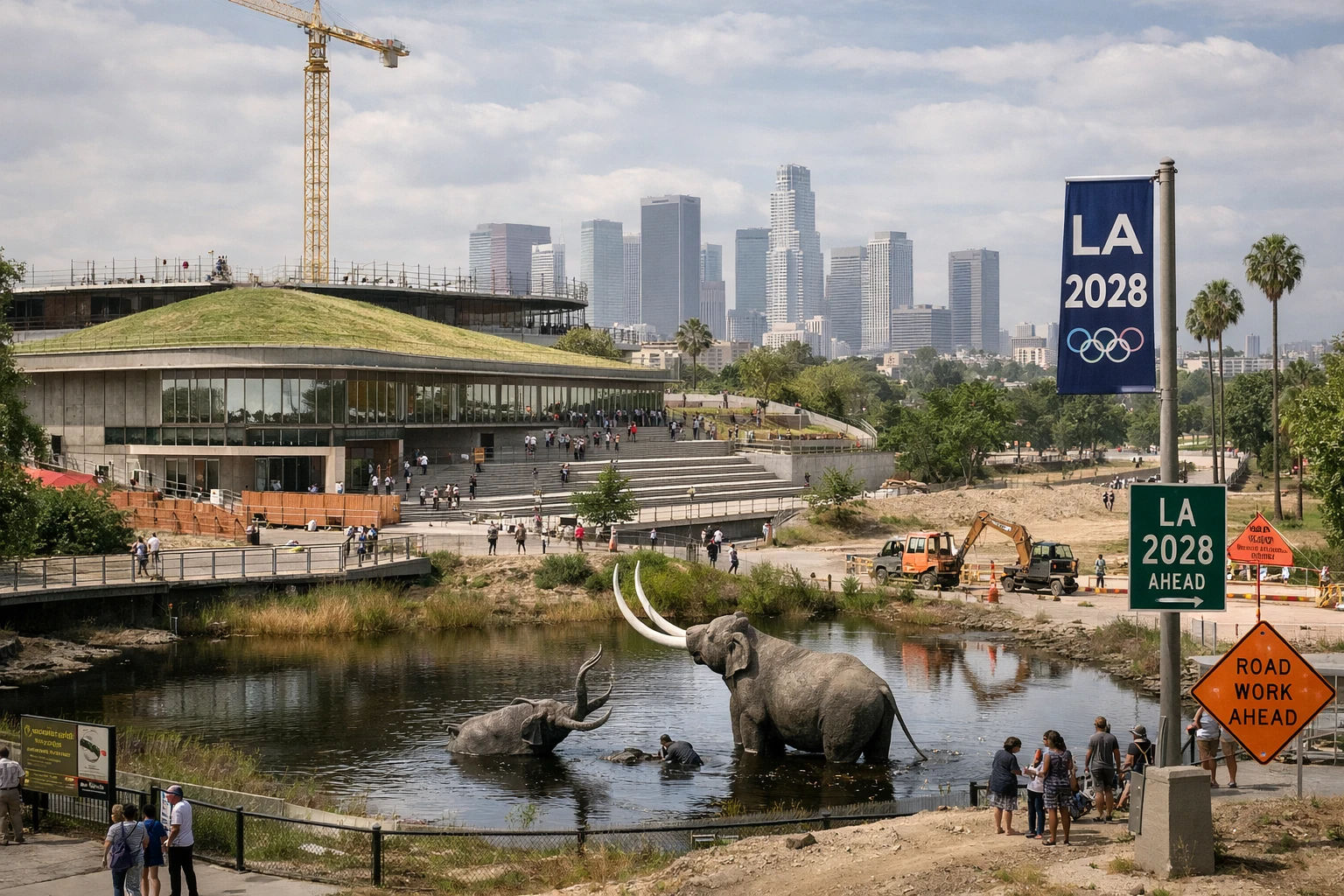
The proposed multi-year renovation is expected to be completed in time for the 2028 Olympics in Los Angeles. That deadline is not a soft target. The 2028 Games will bring more international visitors to Los Angeles than any event in the city's history, and the Miracle Mile corridor, which will be directly accessible via the new D Line subway extension, is positioned to be one of the primary cultural destinations for those visitors. What they find on Wilshire Boulevard when they arrive needs to be worthy of that moment.
The Design Vision: Loops and Lenses
The competition-winning design, first announced in 2019, reimagines the Museum, active excavation sites, and Hancock Park as a single inside-outside museum closely connected to the surrounding landscape and neighborhood. The design strategy, known as "Loops and Lenses," connects existing structures and introduces new amenities for research and public life.
The "Loops and Lenses" framework is worth understanding because it describes the actual visitor experience the redesign is trying to create, not just the architectural moves. Loops are the pedestrian pathways that connect the various elements of the campus: the museum building, the active excavation pits, the research labs, the new research center, and the park landscape. Lenses are the strategic viewpoints and framing devices that give visitors visual access to things that are currently hidden from them: the ongoing research, the fossil preparation labs, the geological processes that are happening in the ground beneath their feet right now.
The existing tar pits site has always suffered from a fundamental disconnect. You can stand next to an active asphalt seep and watch bubbles rise from prehistoric depths, and then walk 50 feet into the Page Museum and see the fossils those seeps have produced over tens of thousands of years, but the relationship between the outdoor landscape and the indoor exhibitions has never been visually or experientially integrated. The Weiss/Manfredi redesign is specifically solving that disconnection.
The redesign includes a full renovation and expansion of the George C. Page Museum, originally designed by Los Angeles architects Frank Thornton and Willis Fagan and opened in 1977. The updated scheme introduces a new entrance facing Wilshire Boulevard to improve visibility and access, alongside reconfigured interior galleries, visible fossil preparation laboratories, and centralized collections storage. A tapered gallery window establishes visual connections between the central lawn and interior exhibition spaces, while reorganized research and education facilities are intended to bring scientific activity into public view.
"The new configuration makes the process visible."
That tapered gallery window is one of the more significant single elements in the redesign. The current Page Museum presents its research as a product: fossils cleaned, labeled, and displayed behind glass. The new configuration makes the process visible. Visitors looking through the gallery window from the central lawn will see scientists at work on fossils being extracted from the same tar deposits visible through the park. The research and the landscape and the exhibition become a single continuous experience rather than three separate things happening in the same place.
The Samuel Oschin Global Centre for Ice Age Research
The creation of the new Samuel Oschin Global Center for Ice Age Research is a highlight of this reimagined campus. The scientific research hub, a landmark gift from the Mr. and Mrs. Samuel Oschin Family Foundation, will be the intellectual core of La Brea Tar Pits, illuminating how ancient ecosystems responded to climate change and mass extinction, and what those lessons mean for us today.
The newly announced Samuel Oschin Global Center for Ice Age Research is conceived as a distributed research entity embedded throughout the campus rather than a single, standalone building. Through upgraded laboratories, public-facing workstations, and expanded partnerships, the center is intended to strengthen the integration of ongoing paleontological research with exhibition and education programs.
The decision to conceive the Oschin Center as distributed rather than standalone is the most architecturally interesting choice in the entire redesign. Instead of a new building that houses research separately from the visitor experience, the research infrastructure is woven throughout the campus. A lab station is accessible from a visitor pathway. A working fossil preparation table is visible through a glass wall from an exhibition gallery. The research is not behind the scenes. It is the scene.
The Samuel Oschin Global Center for Ice Age Research will be a venue for research partnerships, educational initiatives, and digital platforms. The new center will also serve as a visitor attraction, with immersive installations and interactive experiences telling the story of Los Angeles' Ice Age past, when mammoths and dire wolves roamed the site.
"There is no place on Earth like La Brea Tar Pits."
"There is no place on Earth like La Brea Tar Pits," said Lynda Oschin, chairman of the board and secretary of the Mr. and Mrs. Samuel Oschin Family Foundation. "Through this work, I know the lessons of Ice Age Los Angeles will inspire countless scientists and young students here and globally."
The Ice Age framing of this research center carries specific urgency in 2026. The La Brea site documents an ancient climate transition: a period when the ecosystems that had been stable across the Pleistocene were disrupted by warming temperatures and the arrival of a new apex predator, humans. The fossils in the tar are a record of how species respond to rapid environmental change. At a moment when Los Angeles and the rest of the world are in the middle of the fastest climate transition in the history of human civilization, that record is not merely interesting. It is directly relevant.
The New Entrance and Lake Pit Experience
Among the most visually dramatic elements in the new renderings are the landscape interventions that surround the Page Museum and the Lake Pit.
The Lake Pit, the large asphalt lake visible from Wilshire Boulevard that has become the site's most iconic outdoor element, will receive a bridge crossing and a pedestrian path around its perimeter. That sounds simple, but the current experience of the Lake Pit is almost entirely visual. You can look at it from the fence line, observe the fiberglass mammoth sculptures partially submerged in the dark surface, and move on. The redesign makes the Lake Pit an experiential destination rather than a viewing point: a path that takes you around its perimeter, close enough to observe the surface and smell the sulfurous asphalt, with a bridge that provides a crossing perspective looking down into the dark material that has been trapping organisms for 50,000 years.
Plans include the addition of the Samuel Oschin Global Centre for Ice Age Research, a semi-submerged exhibition building that extends the existing subterranean elements of the Page Museum, with a glass facade located under a large circular berm wrapping around the base of the bas-relief-clad museum.
The semi-submerged element of the new Oschin Centre is a direct response to the geology of the site. The existing Page Museum already has subterranean elements because the tar seeps extend below the surface in ways that shaped where the building could be placed and how deep it could go. The new design extends that underground logic into a new exhibition building, half-buried in the circular berm that wraps the museum exterior, with a glass facade that faces the central lawn. The berm itself preserves the iconic bas-relief frieze on the Page Museum's exterior, which depicts Ice Age megafauna in a panoramic sequence that has been part of the site's visual identity since 1977.
The expanded rooftop terrace is one of the more practically compelling additions for Angelenos who visit the site regularly. An elevated outdoor event space above the Page Museum, overlooking Hancock Park and the Miracle Mile corridor, is a significant amenity for a site that has historically been unable to activate its outdoor spaces for evening programming in a meaningful way. Combined with the new central lawn landscaping and the Lake Pit path, the redesigned campus will be genuinely usable as a public outdoor destination independent of museum admission.
Who Is Building This?
The team assembled for the La Brea Tar Pits transformation reflects the specific combination of expertise the project requires.
Weiss/Manfredi will serve as design lead for the La Brea Tar Pits project, while Gruen Associates is the project's executive and landscape architect, and Kossmann DeJong is the exhibition designer.
WEISS/MANFREDI, the New York-based architecture and landscape practice led by Marion Weiss and Michael Manfredi, won the commission through an international design competition. The firm's practice is built around the intersection of architecture, landscape, and infrastructure in ways that are particularly well-suited to a site where the geological substrate is actively part of the visitor experience. Their previous projects include the Hunter's Point South Waterfront Park in New York and the Olympic Sculpture Park in Seattle, both of which required designing visitor experiences around complex ecological and infrastructure conditions.
Gruen Associates brings Los Angeles-specific institutional knowledge that an out-of-town firm cannot replicate. The firm has been involved in major cultural and civic projects throughout Southern California for decades, and their role as executive architect and landscape architect ensures that the design's ambitions are translated into buildable reality within the specific regulatory and logistical context of Hancock Park.
Amsterdam-based design studio Kossmanndejong (KDJ) is leading the design of the exhibition spaces and outdoor experiences. Kossmanndejong's expertise in narrative exhibition design, developed across projects at major museums internationally, gives the project a level of storytelling sophistication that the current Page Museum, designed in 1977 using the exhibition language of that era, cannot match.
The Miracle Mile: A Cultural Corridor
Here is the larger story that no local publication has yet framed, and that this moment in the La Brea Tar Pits renovation makes impossible to ignore.
Within roughly one mile along Wilshire Boulevard between Fairfax and La Brea, three of the most significant cultural infrastructure projects in the United States are either opening or transforming simultaneously, all targeting completion before the 2028 Los Angeles Olympics.
The LACMA David Geffen Galleries, Peter Zumthor's 900-foot concrete span above Wilshire Boulevard, opens April 19, 2026. It is the most anticipated architectural opening anywhere in the world this year.
The La Brea Tar Pits transformation, designed by WEISS/MANFREDI, is tracking for completion by 2028. It will be the first comprehensive renovation of one of the world's great natural science sites since the Page Museum opened in 1977.
And DATALAND, the world's first Museum of AI Arts, opened by Refik Anadol Studio at The Grand LA on Grand Avenue, is opening this spring just a short drive down Wilshire from the Tar Pits.
The Academy Museum of Motion Pictures, which opened in 2021 at the corner of Wilshire and Fairfax, anchors the eastern end of this cluster. The Petersen Automotive Museum's dramatic red building sits at La Brea and Wilshire. The Craft Contemporary occupies the former May Company building across from LACMA.
No other stretch of urban boulevard in the United States has this concentration of major new and transforming cultural institutions in a two-year window. The Miracle Mile is becoming what Bilbao was to the Basque Country in the 1990s: a cultural district whose accumulated institutional investment is transforming not just the neighborhood but the city's global perception.
The D Line subway extension is adding stations at Wilshire/La Brea and Wilshire/Fairfax, opening May 8, 2026. By the time the 2028 Olympics begins, the entire Miracle Mile cultural corridor will be directly accessible by subway from every part of Los Angeles County. The combination of the new transit access and the concentrated cultural investment along this stretch of Wilshire represents the most significant urban cultural development in the history of the city.
What You Can Visit Now
The La Brea Tar Pits is open daily, and the active excavation at Pit 91 and the Project 23 salvage project continue during the renovation planning period. The Page Museum galleries, the fossil preparation lab, and the outdoor tar seeps are accessible with general admission during the project's multi-year buildout.
From the park to the exhibition spaces to research and collection facilities, the major transformation, led by architecture firm WEISS/MANFREDI, will invite visitors of all ages to better witness and engage with the scientific process and enjoy the beautiful grounds of this world-famous destination.
The current visitor experience, while showing its age, remains genuinely extraordinary for anyone encountering it fresh. The active asphalt seeps. The Lake Pit with the mammoth sculptures. The working fossil lab visible through glass. The scale of the Ice Age fauna on display inside the museum, including the wall of dire wolf skulls that stops every visitor cold. These elements will be enhanced and integrated by the redesign, not replaced.
"Los Angeles has always been a city of imagination and possibility," said Lynda Oschin in a statement announcing the Oschin Center funding. In the spring of 2026, standing on Wilshire Boulevard and looking at the construction crane silhouettes above LACMA, the La Brea fence line to the west, and the D Line tunneling activity below, that statement does not sound like a press release boilerplate. It sounds accurate.
La Brea Tar Pits is located at 5801 Wilshire Blvd, Los Angeles, CA 90036, adjacent to LACMA in Hancock Park. The museum is open daily. For information on the Reimagining La Brea Tar Pits transformation project and donation opportunities, visit tarpits.org/reimagine. The LACMA David Geffen Galleries open April 19, 2026, at 5905 Wilshire Blvd. The D Line subway extension stations at Wilshire/La Brea and Wilshire/Fairfax open May 8, 2026.